- Responsibility
- Climate & Environment
Understanding and respecting planetary boundaries

The focus of our environmental activities is on climate protection. This is because our climate has already reached its limits. Our supply chain is the most important lever for effectively reducing our greenhouse gas emissions. And not just with our direct partners: many emissions are generated in upstream production steps. Decarbonising our supply chain will therefore be the biggest challenge in the coming years.
Climate targets

Scientific climate targets by 2031
The Otto Group has had its 2024 climate target, a so-called Science-Based Target (SBT), officially validated by the Science Based Targets Initiative (SBTi): By 2031, the Group aims to reduce its greenhouse gas emissions by 42% in absolute terms and without offsetting compared to 2021 - and not just in relation to its own business activities, but along the entire supply chain, right through to the use and disposal of products.
Scope 3, 2, 1 - countdown for emissions
Our focus is on the transformation of the supply chain
At bonprix, the focus is on greenhouse gas emissions caused by the consumption of raw materials and the manufacture of our products (Scope 3). In addition to the use of raw materials with a lower climate impact, improving the ecological impact of our supply chain partners is therefore crucial to achieving the Science-Based Target (SBT). We are focussing our climate protection measures on transforming the supply chain, including improving energy efficiency and switching to renewable energies.

Our efforts with regard to decarbonisation in the supply chain
We are working together with our suppliers at various levels to decarbonise our supply chain and thus achieve the Otto Group's SBT:
On the one hand, these are the use of renewable energies and the increase of energy efficiency in the supply chain as well as the increased use of climate-friendly materials in our products.
We are currently trialling various approaches in pilot projects - with the aim of identifying the best and most efficient ways and means for our suppliers to achieve their goals.
In one project, selected factories receive very individual and close support: a local technical service provider (BluWin) visits our suppliers on site and analyses processes and machinery in order to identify measures and provide them with a return on investment (ROI).
The second project is Apparel Impact Institute’s Carbon Tech Assessment (CTA), and is operated by the service provider RESET Carbon. In the CTA, existing data and information from the factories is analyzed and potential measures are identified. For example, our suppliers can use the Higg FEM, which we have been using for many years, as a data source.
Once the current pilot phase has been completed, we will define specific roadmaps for our suppliers up to 2031 based on the insights gained.
Scope 3, 2, 1 - countdown for our emissions
Our emissions data distinguishes between Scope 1, Scope 2 and Scope 3 emissions in accordance with the Greenhouse Gas Protocol:
Scope 1: Direct emissions from our own operations, e.g. from the combustion of fossil fuels such as petrol in vehicles or oil in boilers. This scope covers far less than 1 % of our emissions.
Scope 2: Indirect emissions in connection with purchased heat, electricity, steam or refrigerants. This scope comprises just under 1 % of our climate emissions.
Our most important lever for reducing Scope 2 emissions is the purchase of green electricity.
Scope 3: Other indirect emissions from our value chain, such as from purchased products and services and transport. At around 99%, this scope comprises the largest proportion of our emissions.
Our Goals
Climate
As part of the Otto Group, we share the climate target of reducing our Scope 1, 2 and 3 greenhouse gas emissions by 42% in absolute terms by 2031 (compared to the base year 2021). This target was officially validated by the Scienced Based Targets Initiative 2024.
Vendor Score Card
Our suppliers are our most important partners when it comes to implementing changes in the supply chain. That is why, in addition to quality and cost-effectiveness, we have also firmly anchored sustainability issues such as transparency and environmental as well as social aspects in our supplier evaluation system, the Vendor Score Card.
Suppliers are assessed according to these criteria and can achieve up to 100 percentage points. A total of 30% of the points are awarded for sustainability. In this way, we incentivise and reward the commitment of our partners. Positive results and potential for improvement are regularly discussed in supplier meetings.
Chemicals

Detox for our production
Chemicals are required when dyeing, washing or finishing textiles. The damage to workers, customers and the environment caused by the use and disposal of chemicals is therefore one of the key risk issues in the fashion industry. Inadequate treatment of wastewater in the production countries poses a particular threat to local ecosystems, drinking water reserves and farmland.
Not all chemicals are the same
Our most important tool for eliminating defective chemicals is clear specifications for our suppliers and their upstream stages: The Restricted Substances List (RSL) refers to the end product and lists substances and substance groups that must not be detectable in it or only to a limited extent. The Manufacturing Restricted Substances List (MRSL) (LINK) names chemicals that are either completely banned in production or are restricted by limit values. Our MRSL complies with the requirements of the Textiles Partnership, which are identical to the MRSL of the Zero Discharge of Hazardous Chemicals (ZDHC) initiative. We completely excluded perfluorinated and polyfluorinated chemicals (PFCs) from the production of our clothing back in 2018.
Inventory via App – Bhive®.
The introduction of the BHive® tool significantly increases transparency in chemical management. BHive® enables production facilities to create a digital chemical inventory using smartphone photos of chemical product labels. The comparison with our MRSL takes place automatically. This allows companies to recognise at a glance which chemicals need to be replaced.
Menschenrechte
Our Human Rights Due Diligence Statement
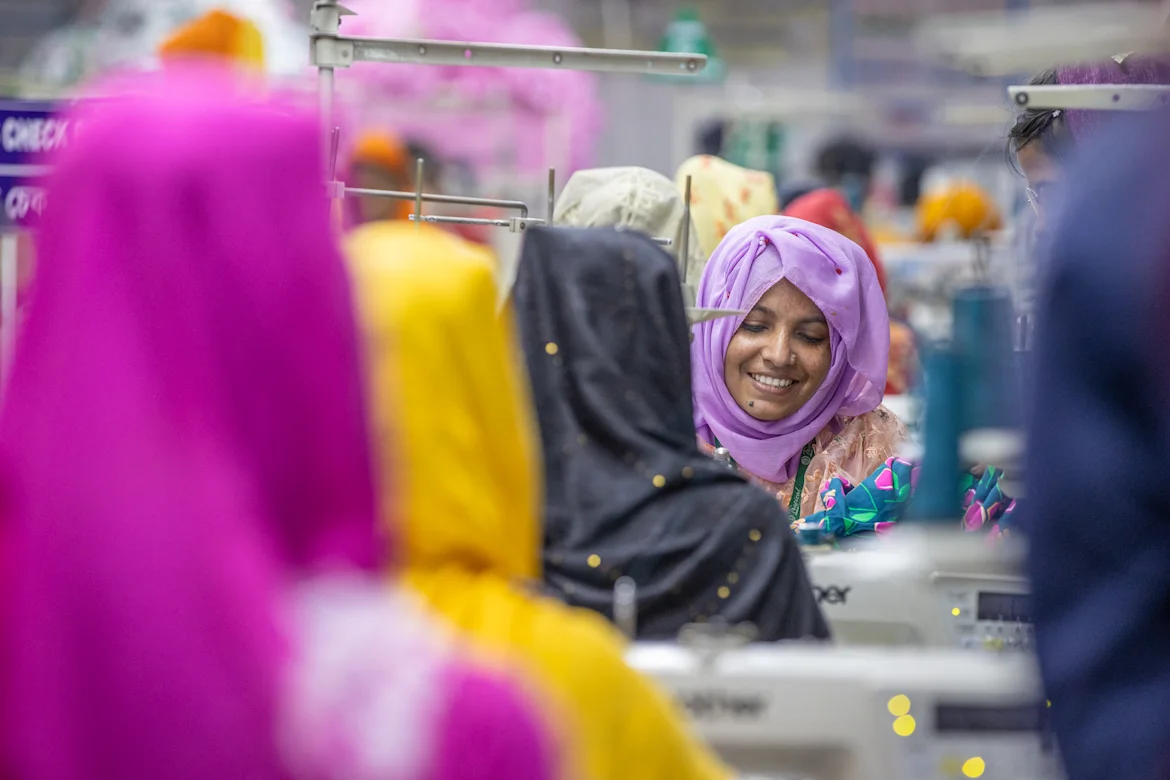
Our commitment to human rights is set out in our Human Rights Due Diligence Statement. It defines our standards with regard to human rights in our own company and the value chain and explains how we implement our duty of care. The policy statement also provides an overview of the key processes that we have implemented in order to fulfil our human rights due diligence obligations. We recognise that due diligence in relation to human rights is an ongoing process. For this reason, we regularly subject our own business operations and our business partners to a risk analysis to identify potential risks and actual violations. Key levers for countering these risks are binding guidelines and specifications, our measures in the supply chain that initiate social and environmental improvements, opportunities for our employees and the employees of our partners to draw attention to grievances and our involvement in multi-stakeholder initiatives to contribute to industry solutions.
We consistently follow up on reports of human rights violations
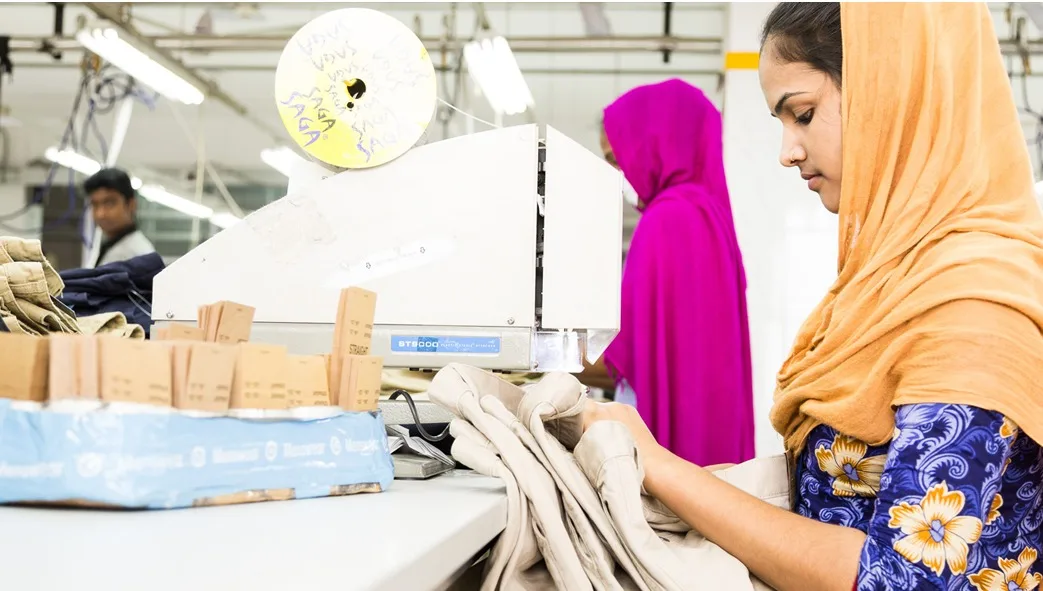
Despite all measures and care, it is possible that violations of human rights will be recognised. We can only deal with this if we learn about it. In such cases, there is a whistleblowing and complaints system within the Otto Group that can be used by our employees and supply chain workers as well as customers or external parties. Every report is carefully scrutinised. If complaints are received by amfori or ACCORD in factories where we have production facilities, a structured process is in place to ensure that the Otto Group learns about the cases and is involved in the resolution process. Overlaps in the supplier base and fast, comprehensive access to resources - should the need for remediation arise - make an Otto Group-wide approach to complaints particularly useful. We therefore report on the number of complaints and any remedial action taken at Group level in the Otto Group's annual report.
Shared standards
These production requirements are mandatory for all partners
Code of Conduct
The starting point for our social compliance activities is the amfori Code of Conduct. It covers the topics of freedom of association and the right to collective bargaining, occupational health and safety, special protection for young employees, exclusion of forced labour, ethical business practices, exclusion of discrimination, reasonable working hours, exclusion of child labour, exclusion of precarious employment and environmental protection. The Code of Conduct is also part of our Business Partner Declaration. This declaration lists all sustainability requirements for our suppliers and must be signed by all business partners in the area of merchandise.
The Otto Group Social Programme
As a member of the Otto Group, we implement the Group-wide social programme. The aim of the social programme is to disclose local working conditions and improve them in the long term. Specifically, this means that production facilities in risk countries (according to amfori BSCI) must present a valid social audit in order to be able to produce for us. We accept SA8000 certificates, amfori BSCI audits with the result A-C or the Otto Group assessment. All audits are carried out by independent auditing companies on site.
You can find our report on the German Supply chain Due Diligence Act (LkSg) here
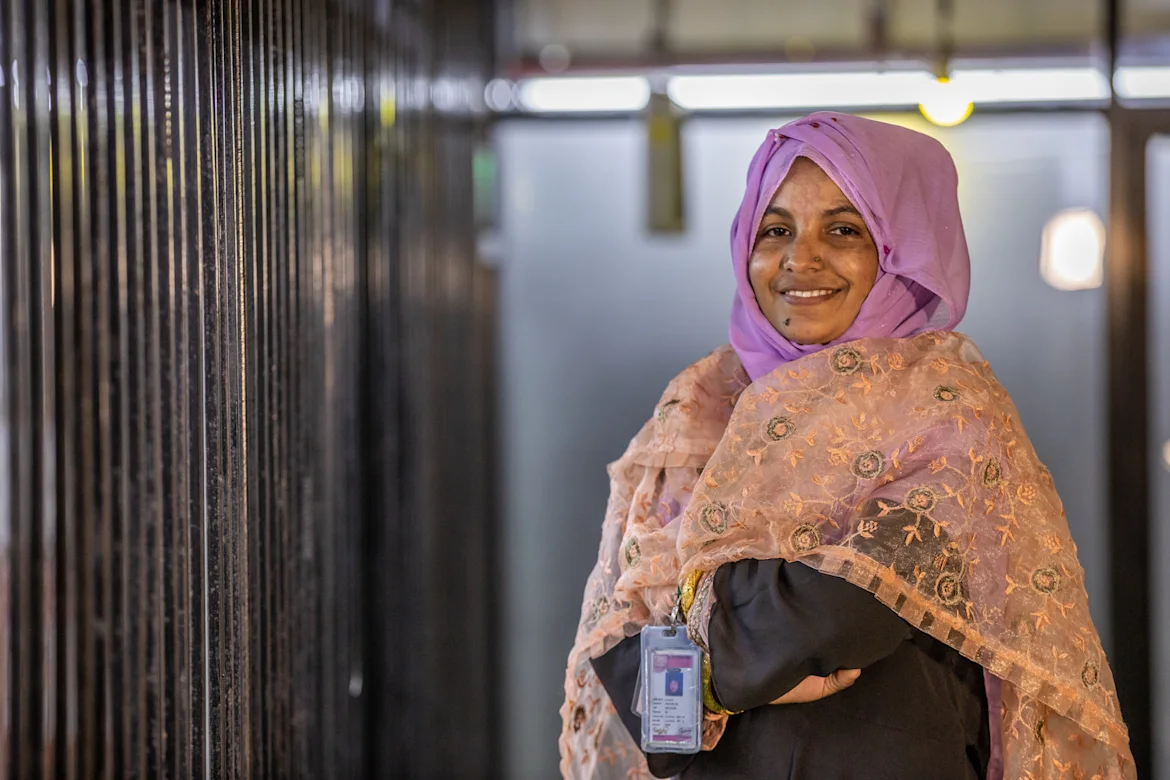
Documentation and reporting is a central component of the German Supply Chain Due Diligence Act (LkSG). Once a year, we publish our report here on the measures taken to comply with due diligence obligations with regard to human rights, environmental protection and workers' rights in our supply chain.